Is Opening a Restaurant in Dubai a Good Business Opportunity?
Dubai’s diverse population and steady tourism flow create genuine demand across almost every dining category, from quick-service concepts to premium fine dining. At the same time, competition is intense, and rent, staffing, and fit-out costs can be significant depending on the concept and location.
Before committing capital, it’s worth thinking through the restaurant concept, target customer base, and pricing strategy in detail. A concept that works well in one neighbourhood or mall may not perform the same way elsewhere, so market research and a realistic financial plan matter as much as the food itself.
What Licence Do You Need to Open Restaurant in Dubai?
A restaurant in Dubai needs a business licence covering the food and beverage activity, issued either by the Department of Economy and Tourism for mainland setups or by the relevant free zone authority. This licence is separate from food safety approvals, which are handled by the municipality or relevant food control authority. In practice, most restaurants need both the business licence and specific food-related approvals before they can legally operate; one does not substitute for the other.
Requirements to Open Restaurant in Dubai
Requirements vary depending on the restaurant’s size, concept, and location, but most setups share a common set of considerations around activity classification, premises, and food safety compliance.
Choose the Right Restaurant Business Activity
The licensed activity needs to match what the restaurant actually does a full-service restaurant, a takeaway outlet, a café, or a catering business may fall under different activity classifications. Selecting the wrong activity can create complications later, particularly if the concept expands to include delivery, catering, or additional service formats.
Choose a Suitable Restaurant Location
Location affects far more than foot traffic. Commercial premises for a restaurant need to be zoned appropriately, accessible to the target customer base, and physically suited to restaurant operations, including ventilation and utility infrastructure. Rent varies significantly by area and property type, so it’s worth weighing footfall potential against ongoing rental costs rather than choosing purely on visibility.
Meet Food Safety and Kitchen Requirements
Commercial kitchens must meet defined standards covering layout, ventilation, food preparation zones, storage, and waste management. Hygiene and food safety compliance are checked as part of the approval process, and premises typically need to be designed or modified with these requirements in mind before an inspection can be completed successfully.
Documents Required to Start a Restaurant in Dubai
| Document | Purpose |
| Passport and identity documents | Establishes identity of owners/partners |
| Trade name reservation | Confirms the approved business name |
| Initial approval certificate | Confirms no objection to the proposed activity |
| Tenancy contract / Ejari | Verifies the commercial premises |
| Kitchen and floor plan layout | Supports food safety and municipality review |
| Food safety/municipality approval | Confirms compliance with food handling standards |
| Legal structure documents (MOA, etc.) | Required depending on the chosen legal form |
The exact combination of documents can differ depending on whether the restaurant is a standalone outlet, part of a larger group, or operating within a free zone or mall, so it’s worth confirming the current checklist with the relevant authority early in the planning stage.
How Much Does It Cost to Open Restaurant in Dubai?
There’s no single fixed answer to how much it costs to open restaurant in Dubai the investment depends heavily on concept, size, location, and the level of fit-out required. It helps to think of the cost in categories rather than one lump figure.
Business License and Registration Costs
This covers trade name reservation, initial approval, the licence fee itself, and any legal documentation tied to the chosen business structure. These costs are generally smaller relative to the overall investment but still need to be budgeted accurately.
Restaurant Rent and Security Deposit
Rent is often one of the highest ongoing costs and varies significantly based on location, unit size, and whether the space is a standalone unit, mall outlet, or part of a mixed-use development. Most commercial leases also require a security deposit paid upfront.
Interior, Kitchen and Equipment Costs
Fit-out costs cover interior design, construction, commercial kitchen equipment, refrigeration, ventilation systems, and furniture. This category tends to be the most variable, since a small café and a full-service restaurant have very different equipment and design needs.
Staff, Visas and Initial Operating Costs
Beyond the physical setup, budgets need to account for recruitment, employee visas, salaries, utility deposits, initial inventory, and working capital to cover the early months of operation before revenue stabilises.
How to Open Restaurant in Dubai Step by Step
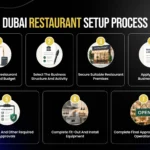
Decide the Restaurant Concept and Budget
Start by defining the cuisine, target customers, and restaurant format, whether that’s a full-service restaurant, casual dining, café, or delivery-focused kitchen. This decision shapes every requirement that follows, from location to licensing to kitchen design, so it’s worth finalising before moving to the next steps.
Select the Business Structure and Activity
Choose the appropriate legal structure and licensed activity based on the concept and ownership arrangement. This is closely tied to the wider business setup in Dubai process, since the structure chosen here affects visa allocation, ownership, and future expansion options.
Secure Suitable Restaurant Premises
Identify a location that fits the concept and budget, then complete the tenancy agreement and Ejari registration. Premises should be reviewed against food safety and layout requirements before signing a long-term lease, since retrofitting an unsuitable space can be costly.
Apply for the Business Licence
Submit the licence application with the required documents, including trade name approval and initial approval. Anyone setting up on the mainland should review the specific considerations involved in Dubai mainland business setup, since restaurant licensing on the mainland can differ from free zone requirements.
Obtain Food and Other Required Approvals
Submit kitchen layout plans and complete the food safety and municipality approval process. Depending on the concept, additional approvals may apply for example, if the restaurant serves alcohol or operates in a specific type of development.
Complete Fit-Out and Install Equipment
Once plans are approved, proceed with construction, kitchen installation, and interior fit-out according to the approved layout. Any deviation from the approved plan can delay final inspection, so it’s worth keeping the build aligned with what was submitted.
Complete Final Approvals and Start Operations
Before opening, the premises typically need a final inspection to confirm compliance with food safety and civil defence requirements. Once this is cleared, the restaurant can begin operating under its licence.
Mainland vs Free Zone for a Restaurant in Dubai
The choice between mainland and free zone affects where the restaurant can operate and which customers it can serve directly. Mainland licensing generally allows a restaurant to operate anywhere across Dubai with direct walk-in access, which suits most standalone or mall-based restaurants. Free zone setups can work well for specific business models, such as those focused on delivery, catering, or operating within the free zone’s own premises, but options for a customer-facing dine-in restaurant are more limited depending on the zone’s regulations. The right choice depends on the restaurant’s format and target customer base rather than a general rule of one being better than the other.
How Long Does It Take to Set Up a Restaurant in Dubai?
There’s no single fixed timeline for opening a restaurant in Dubai. The overall duration depends on how quickly premises are secured, how complex the fit-out is, how many approvals the concept requires, and how promptly inspections are scheduled and passed. A simple café concept in a pre-approved unit will generally move faster than a full-service restaurant requiring extensive kitchen construction and multiple approvals, so it’s more useful to plan around these variables than to expect a fixed number of weeks.
Common Mistakes When Starting a Restaurant in Dubai
- Choosing a licensed activity that doesn’t match the actual restaurant concept
- Signing a lease on premises unsuitable for commercial kitchen requirements
- Underestimating fit-out and equipment costs relative to the overall budget
- Overlooking food safety and municipality approval timelines
- Planning finances around one fixed cost figure rather than a full cost breakdown
- Starting operations or marketing before all required approvals are finalised
Planning Your Restaurant Setup in Dubai
Opening a restaurant in Dubai works best when licensing, premises, food safety approvals, fit-out, and operating costs are planned together rather than tackled one at a time. Overlooking any one of these areas, particularly food safety compliance or realistic budgeting, tends to cause delays later in the process. Restaurants that later need to manage licence renewals or ongoing administrative work can also review trade license renewal in Dubai requirements to stay ahead of compliance deadlines. For those who prefer support navigating the licensing and approval steps, Profound UAE can assist with PRO services in Dubai alongside the wider setup process.
FAQs About Opening a Restaurant in Dubai
1. How much does it cost to open restaurant in Dubai?
Costs vary widely based on concept, size, location, and fit-out requirements, covering categories such as licensing, rent, kitchen equipment, and staffing rather than one fixed amount.
2. What licence do I need to open restaurant in Dubai?
You need a business licence covering the food and beverage activity, along with separate food safety approval from the relevant municipality or food control authority.
3. What documents are required to open restaurant in Dubai?
Common documents include identity documents, trade name approval, initial approval, tenancy contract, kitchen layout plans, and food safety approval, though the exact list depends on the setup.
4. Can I open restaurant in a Dubai free zone?
Yes, though customer-facing dine-in restaurants have more flexibility with mainland licensing, while free zones can suit specific formats like delivery or catering-focused concepts.
5. How long does it take to open restaurant in Dubai?
Timelines vary depending on premises readiness, fit-out complexity, and how many approvals the concept requires, so there’s no single fixed duration.
6. Do I need food safety approval to open restaurant in Dubai?
Yes, food safety and municipality approval are required in addition to the business licence, and premises need to meet kitchen and hygiene standards before opening.
7. What are the biggest costs when opening a restaurant in Dubai?
Rent, kitchen fit-out and equipment, and staffing/visa costs are typically the largest categories, alongside licensing and initial working capital.
8. Is mainland or free zone better for a restaurant in Dubai?
It depends on the restaurant format; mainland generally suits walk-in, customer-facing restaurants, while free zones can work for specific models like delivery or catering.
9. What common mistakes should I avoid when starting a restaurant in Dubai?
Common mistakes include choosing the wrong activity, underestimating fit-out costs, overlooking food safety approvals, and starting operations before all approvals are complete.
10. Do I need a special approval to serve alcohol in a Dubai restaurant?
Yes, serving alcohol typically requires a separate licence or approval beyond the standard restaurant business licence, and requirements depend on the venue type and location.