This guide covers what a professional License involves, who needs one, what it costs, and how the application process works from start to finish. Licensing is only one part of a broader business setup in Dubai journey that also includes jurisdiction selection, visas, and banking, so it helps to view this decision in that wider context.
What Is a Professional License in Dubai?
A professional license is issued to individuals or companies offering services based on skill, expertise, or intellectual capability rather than the buying and selling of physical goods. It typically covers consultancy, technical, artisan, and certain regulated service activities.
This differs from a commercial License, meant for trading, import/export, and retail involving goods, and an industrial License, for manufacturing or processing. The professional License sits in its own category because the underlying activity is service delivery, not the movement of physical products a distinction that can affect available legal structures and ownership rules.
Who Needs a Professional License in Dubai?
A professional License generally suits entrepreneurs and businesses whose core offering is a service, skill, or specialised expertise. This includes:
- Independent consultants and advisory firms
- IT professionals and software service providers
- Marketing, design, and creative practitioners
- Accountants, bookkeepers, and financial advisors (subject to activity classification)
- Trainers, coaches, and education-related service providers
- Engineers, architects, and technical consultants
- Skilled tradespeople offering artisan or craft-based services
If your business model centres on selling physical products, importing goods, or running retail operations, a commercial License is likely more appropriate. The right classification depends on how your primary activity is defined by the authority, not just how you describe the business informally.
Professional License Activities in Dubai
Activity selection is arguably the most important step in the licensing process. The activity you choose determines what you’re legally permitted to do, which approvals you may need, and which legal structures are open to you. Authorities maintain detailed activity lists, and each one carries its own classification; some are open with minimal restrictions, while others need approval from a sector regulator before the License is issued.
Common Professional License Activities
| Activity Category | Examples | Additional Approval Likely? |
| Consultancy | Management, business, and specialist consulting | Usually not, unless sector-specific |
| Technology | IT services, software consultancy, technical support | Occasionally, depending on scope |
| Marketing & Creative | Marketing consultancy, design, creative services | Rarely |
| Finance & Accounting | Accounting, bookkeeping, certain financial consultancy | Sometimes, depending on activity |
| Education & Training | Training, coaching, eligible educational services | Often, via education regulator |
| Engineering & Architecture | Engineering consultancy, architecture, technical services | Often, via relevant authority |
| Professional Services | Eligible legal, advisory, and specialist services | Often, via sector regulator |
| Media & Creative Services | Publishing, artistic, selected media activities | Sometimes, via media authority |
If you expect to expand your activity list later, it’s worth planning, since adding or changing business activities on an existing License involves its own approval steps.
Professional Activities That May Need Additional Approval
Certain sectors are regulated beyond standard licensing, meaning the Department of Economy and Tourism (or the relevant free zone authority) isn’t the only body involved:
- Healthcare-related consultancy – may need approval from the health authority
- Legal services – typically require specific qualifications and regulatory clearance
- Education and training – often need sign-off from the relevant education authority
- Engineering and architecture – usually require proof of qualification and, sometimes, municipal approval
These extra steps don’t necessarily make the process longer, but the timeline and documentation can differ significantly from a standard consultancy License.
Professional License Requirements in Dubai
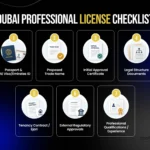
There isn’t a single, fixed checklist that applies to every applicant. Requirements shift depending on the chosen activity, legal structure, and whether you’re setting up on the mainland or in a free zone. That said, most applications share a common foundation of documents and approvals.
Documents Required for a Professional License
- Passport copies and, where applicable, UAE visa or Emirates ID of shareholders/partners
- Proposed trade name (usually requiring pre-approval)
- Initial approval certificate from the relevant authority
- Legal structure documents, such as a Memorandum of Association or Local Service Agent agreement, where relevant
- Tenancy contract or Ejari registration for mainland premises (requirements can differ for free zones)
- External approvals from a sector regulator, if the activity requires one
- Proof of relevant qualifications or experience, for regulated professional activities
Exactly which of these apply, and in what order, depends on your specific activity and jurisdiction, so it’s worth confirming the current checklist with the relevant authority before submitting documents.
How to Get a Professional License in Dubai
The process generally follows a logical sequence, even though the specific requirements at each stage vary by activity and jurisdiction.
Step 1: Choose Your Professional Activity
This is the foundation of the whole application. The activity code you select determines the approvals you’ll need, the legal structures available, and what you’re permitted to do once licensed. An activity that doesn’t precisely match your intended operations can create complications later, including restrictions on future additions.
Step 2: Choose Mainland or Free Zone
Decide early whether a mainland License or a free zone License better fits your business model. This choice affects where you can operate, what facilities you need, and how visas are handled; it shouldn’t be a secondary detail once paperwork is underway.
Step 3: Select the Legal Structure
Depending on your activity and circumstances, applicable structures might include a sole establishment, a civil company, an LLC, or a branch of a foreign or local company. The right choice depends on the number of partners, liability preferences, and the specific activity being licensed.
Step 4: Reserve the Trade Name
Your trade name needs to be reserved with the licensing authority and should align with your chosen activity. Certain words and phrases are restricted, so check naming guidelines before submitting an application.
Step 5: Obtain Initial Approval
Initial approval confirms the authority has no objection to your proposed activity and structure. It’s an important milestone, but it is not the same as permission to begin operating; you’ll still need to complete the remaining steps, including document submission and premises arrangements, before the License is issued.
Step 6: Arrange Premises & Required Approvals
Mainland businesses typically need a physical office with a valid tenancy contract and Ejari registration, while free zones often offer flexible options, including flexi-desks or shared workspaces. If your activity needs external approval from a sector regulator, this is usually arranged in parallel with premises setup.
Step 7: Submit Documents and Receive the License
Once all approvals and documents are in place, you submit the full application package and pay the applicable fees. After processing, the License is issued, allowing you to begin operations under the approved activity.
Professional License Cost in Dubai
There is no single, universal price for a professional License in Dubai. Costs vary based on the activity, legal structure, chosen authority (mainland or a specific free zone), premises type, number of visas, and whether external approvals apply. Any quote presenting a single fixed number should be treated as an estimate rather than a guarantee.
What Makes Up the Professional License Cost?
| Cost Component | Notes |
| License fee | Varies by authority and activity |
| Trade name reservation | Generally a fixed, modest fee |
| Initial approval | Usually a smaller processing fee |
| MOA / legal documentation | Depends on legal structure and notarisation needs |
| Premises (office/flexi-desk) | Ranges widely by location and facility type |
| External approvals | Applicable only for regulated activities |
| Establishment/immigration card | Required for visa processing |
| Visas | Cost depends on number of visas and applicant category |
| Medical test and Emirates ID | Per-person cost for each visa holder |
| Annual renewal | Recurring cost, separate from the initial setup fee |
License Fee vs Total Business Setup Cost
It’s common to see marketing materials quote only the “License fee,” which can create a misleading impression of the total investment needed. In reality, the License fee is just one line item. Office space, visa processing, external approvals, and post-License services such as PRO services in Dubai all add to the total cost of a fully operational business. When comparing setup options, ask for a breakdown rather than relying on a single headline number.
Mainland vs Free Zone Professional License in Dubai
Both routes have distinct advantages, and neither is universally “better” or “cheaper”; the right choice depends on your business model and target market.
| Factor | Mainland | Free Zone |
| Licensing authority | Department of Economy and Tourism | Specific free zone authority |
| Market access | Can trade directly across the UAE | Typically limited to free zone or international markets, with mainland trade requiring a distributor or additional approval |
| Premises | Generally requires a physical office with Ejari | Often offers flexible options like flexi-desks |
| Ownership | Depends on activity and structure | Generally allows full foreign ownership within the zone’s framework |
| Visa allocation | Based on office size and activity | Based on the free zone’s package and facility type |
| Activity availability | Broad range, subject to authority approval | Depends on the specific free zone’s activity list |
If direct access to the wider UAE market matters, it’s worth reviewing how Dubai mainland business setup compares to free zone options for your specific activity before committing to either route.
Professional License Ownership in Dubai
Ownership rules for professional Licenses have evolved significantly, and full foreign ownership is available for many professional activities and legal structures today. That said, the framework still depends on the specific activity, legal form, and jurisdiction; it’s not accurate to assume identical terms apply across every scenario.
Some structures, particularly certain civil company arrangements, may still involve a Local Service Agent (LSA). An LSA arrangement is not the same as co-ownership; the LSA typically facilitates administrative and government-liaison matters without holding equity, but exact terms depend on the specific agreement used.
Professional License vs Commercial License in Dubai
| Aspect | Professional License | Commercial License |
| Core activity | Services, expertise, skilled work | Trading, buying/selling goods |
| Typical examples | Consultancy, IT services, design, training | Retail, import/export, general trading |
| Operating model | Fee-for-service or project-based | Margin-based, inventory-driven |
| Ownership/structure options | Depends on activity; may include civil company | Generally LLC or similar trading structures |
Choosing between the two isn’t just about the nature of your work today it also affects how easily you can add related activities later, so it’s worth thinking ahead about how the business might evolve.
Professional License vs Freelance Permit
A professional License establishes a registered business entity, with its own trade name, legal structure, and the ability to hire employees and sponsor visas. A freelance permit, by contrast, is generally issued to an individual for personal service delivery under their own name, with more limited scope for growth, hiring, or invoicing multiple clients through a company structure.
Many independent professionals start with a freelance permit and later transition to a full License as their client base grows. Anyone currently freelancing and considering this shift can compare their setup against freelance business setup in Dubai requirements to see what would need to change.
Professional License Renewal and Ongoing Compliance
Professional Licenses are typically renewed annually, requiring an active tenancy or facility agreement, updated documentation, and payment of the renewal fee. If your activity required external approval, that approval may need reconfirming at renewal. Missing a deadline can lead to penalties or License suspension, so it’s worth tracking renewal dates well in advance a process covered in more detail under trade license renewal in Dubai.
Does a Professional License Give You a Residence Visa?
Holding a professional License makes you eligible to apply for a residence visa as a business owner or investor, but the License itself does not automatically grant one. Visa eligibility and quota depend on factors like office space, activity type, and the immigration rules that apply to your jurisdiction and structure.
Common Mistakes to Avoid When Applying
- Choosing the wrong professional activity or legal structure
- Failing to check whether additional approvals are required
- Looking only at the basic License fee instead of the total setup cost
- Choosing between mainland and free zone without considering business needs
- Overlooking renewal dates and ongoing compliance requirements
What to Consider Before Getting a Professional License
Before applying, confirm your activity, legal structure, location, required approvals, documents, and expected costs. Also consider future needs such as visas, banking, tax compliance, and License renewal.
If you need help understanding the requirements or choosing the right setup route, Profound UAE can assist with professional business setup and related services in Dubai.
FAQs About Professional License in Dubai
1. What is a professional license in Dubai used for?
It authorises individuals or companies to offer service-based, consultancy, technical, or skilled activities, as opposed to trading in physical goods.
2. How much does a professional license cost in Dubai?
Costs vary based on activity, legal structure, authority, premises, and visa needs; there is no single fixed price across all cases.
3. How long does it take to get a professional license in Dubai?
Timelines depend on the activity and whether external approvals are required; straightforward consultancy activities are usually faster than regulated ones.
4. Can a foreigner fully own a professional license company in Dubai?
Full foreign ownership is available for many professional activities and structures, though the exact terms depend on the specific activity and legal form chosen.
5. What documents are required for a professional license?
Common documents include passport copies, trade name approval, initial approval, legal structure documents, and tenancy or Ejari details, though the full list depends on your activity.
6. Is a professional license the same as a freelance permit?
No. A professional license creates a registered business entity, while a freelance permit is generally issued to an individual for personal service delivery.
7. Do all professional activities require external approval?
No. Only certain regulated sectors, such as healthcare, legal, education, or engineering, typically require approval from a sector regulator.
8. What’s the difference between a professional license and a commercial license?
A professional license covers service and expertise-based activities, while a commercial license covers trading and the buying/selling of goods.
9. Does getting a professional license automatically give me a UAE residence visa?
No. It makes you eligible to apply for a visa, but eligibility and quota depend on additional factors like office space and activity type.
10. Do I need a physical office for a professional license?
Mainland Licenses generally require a tenancy contract and Ejari registration, while free zones often offer more flexible premises options, such as flexi-desks.